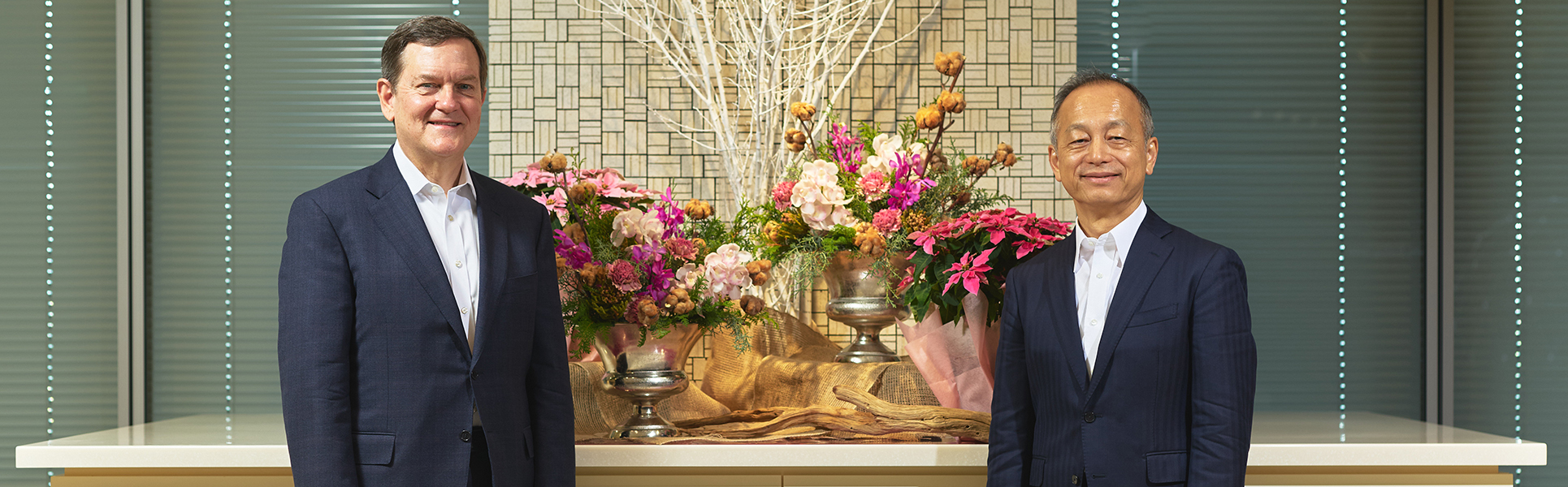
No.60 Interview with Mr. Matthew P. Goodman
The international order that has governed global affairs for eight decades is under strain from multiple directions—rising powers, eroding democratic confidence, and transformative technologies. To explore whether this is a moment of crisis or transition, and what role global companies can play, we were honored to speak with Matthew P. Goodman, Distinguished Fellow for Geoeconomic Studies at the Council on Foreign Relations (CFR) and a former White House and Treasury official with decades of experience at the intersection of economic policy and international affairs.
(Interviewer: Kenichiro Mizoguchi, President of Hitachi Research Institute)
Table of Contents
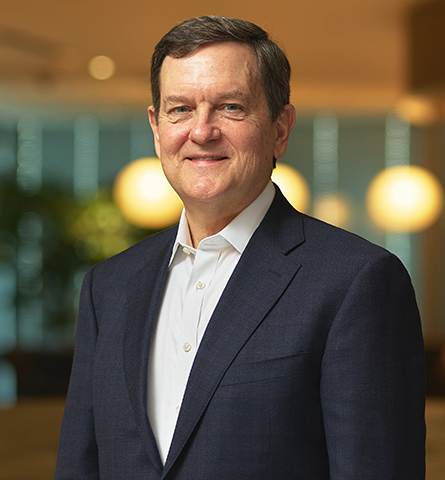
Matthew P. Goodman
Matthew P. Goodman is an expert in geoeconomic policy who served as Distinguished
Fellow for Geoeconomic Studies at the Council on Foreign Relations (CFR), where he led RealEcon: Reimagining American Economic Leadership. His government service included roles as Director for International Economics on the National Security Council staff and financial attaché at the U.S. Embassy in Tokyo.
Before joining CFR, he held senior positions at the Center for Strategic and International Studies (CSIS), Goldman Sachs, and the Albright Stonebridge Group. He has a BSc in economics from the London School of Economics and an MA in international relations from Johns Hopkins SAIS.
MizoguchiOver the last 80 years, the world has seen remarkable growth. Since World War II, there have been no major wars among great powers. Democracy, rule of law, international collaboration, and comparative advantage have functioned well together. Infant mortality fell sharply, while the global population expanded markedly, people began living much longer, and the world economy experienced substantial growth. Yet this appears to be changing. Why is this happening, and how do you see the situation?
GoodmanYou're right that this period has been extraordinary—one of the very few times in history with such sustained peace and prosperity at a global level. It resulted from the devastation during the first half of the last century. Coming out of that, there was a shared recognition that something different was needed—a system that would prevent such terrible conflict from recurring.
At that time, the United States was mainly positioned to lead. That created a rare moment to set the rules and build institutions to oversee them: the Bretton Woods system, the IMF, the World Bank.
Yet inevitably, institutions lose vitality over time. Rules established decades ago need updating, but that requires a global consensus we don't have today. The U.S. can no longer insist on particular rules on its own, and other large countries want more voice—not necessarily disagreeing with the substance, but seeking recognition as important players.
There's also been an erosion of public trust. In the 1950s, most Americans were growing more prosperous and paid little attention to Washington. That changed in the 1970s with Watergate, Vietnam, and growing inequalities.
So the strain comes from multiple directions: an aging structure, reduced American capacity and commitment, rising challengers, new issues the original rules weren't designed to address—climate, pandemics, industrial subsidies—and diminished trust in institutions.
But as the English expression goes, we shouldn't "throw the baby out with the bathwater"—meaning we shouldn't discard what works along with what doesn't. The system has problems, but it remains better than many alternatives. We should work to improve it rather than abandon it entirely.
As Winston Churchill famously said, democracy is the worst form of government except for all the others. I think about this international order the same way—it's flawed, but fundamentally better than the alternatives. That's why it's worth fixing.
MizoguchiShould we see these 80 years as prosperity for all humankind, or as the ending of the U.S. hegemony—similar to how the Roman or British eras ended?
GoodmanThere's truth in that framing, but also an important difference. Rome couldn't be separated from its empire; when its leaders could no longer run the system, it collapsed. The post-war order is different—though it depended on American leadership, it was built on something more broadly shared. This system has worked for many countries. The country that has benefited most may be China, where hundreds of millions have risen from poverty to the middle class. The system has its own durability beyond any single leader.

MizoguchiWe appreciate the freedoms that come with living in democratic societies.
Even if you don't like your leader, you still have freedom. We believe this kind of society is a good one. After World War II, the number of democratic countries increased while autocratic countries decreased. However, that trend appears to have reversed. Why is this happening?
GoodmanI think two factors are involved. One is that democracy's strength—its flexibility and ability to self-correct—has a flip side: it can be inefficient and hard to deliver consistent results. The other factor is the new information environment. It's much harder for leaders to propose and implement policy when, a nanosecond after they say something, millions criticize it and share that criticism instantly.
Consider Abraham Lincoln. He was criticized terribly for many things, including constraining some democratic rights during the Civil War. But those critics stood on street corners with signs—they weren't reaching ten million people instantly through their phones. I wonder if Lincoln could have led so successfully in today's environment. The combination of democracy's built-in inefficiencies with this information era makes democratic leadership harder to sustain.
MizoguchiThere's also the economic aspect. Many believed that economic growth would naturally lead to political openness. That expectation hasn't been met in several major economies. What's the role of economics in this story?
GoodmanSome countries have managed to deliver increased prosperity without political liberalization. As long as they keep delivering, citizens might accept trade-offs—giving up certain freedoms in exchange for economic progress. The question is whether that's sustainable. When growth slows and expectations aren't met, the bargain may not hold.
MizoguchiIt's not working smoothly even in the United States. America used to be widely admired—people believed in the middle-class dream, that hard work meant success for you and a better life for your children. The economy is still strong, but there's growing division. What factors lie behind this growing division?
GoodmanSomething is going wrong in the U.S. model, but we need perspective. The U.S. remains the largest economy, still growing faster than expected, still innovative. On average, people are better off than in the 1950s—that supposed golden era excluded many people.
But it's true that certain regions and sectors have been badly disrupted by globalization, technological change, and shifting trade patterns. These areas have seen their economic foundations erode. There have also been specific governance failures—particularly in education. The system once provided skills sufficient for available jobs; now there's a mismatch between what the economy needs and what people are trained to do.
Happiness depends on many things beyond economics. People may be better off financially than 20 years ago yet still feel left behind. Immigration adds another layer, touching both economic and social concerns. New immigrants may be perceived as threats—economically and culturally—by those who themselves descend from immigrants.
But this tension isn't new. In the 1850s, my German ancestors weren't welcomed warmly, nor were the Irish. Jewish and Southern European immigrants faced similar hostility. Yet over time, those groups became part of the broader society. If you see the grandchild of an immigrant today, regardless of how the grandparent arrived, that child is typically integrated—speaking fluent English, participating in American culture. I believe that pattern will continue despite the transitional frictions caused by immigration.

MizoguchiPolitics, economy, systems, values—things are changing dramatically. What future scenarios do you see for the global order? Should we expect fundamental changes within ten years?
GoodmanIt's definitely possible. Based on recent conversations with government officials, I see three possible orders emerging out to 2040.
The first is what some call "the law of the jungle"—no rules, no leader, everyone fighting for their own position economically and politically.
The second is a world divided into U.S.-led and China-led blocs—a bifurcated global system.
The third is "flexible multipolarity," or what I sometimes call "variable geometry"—groups of countries that shift depending on the issue. Some work together on technology development, others on trade rules, others on climate change, with different membership depending on the issue.
Of the three, variable geometry seems most likely—and the most workable. A "law of the jungle" world benefits no one reliably, and a bifurcated bloc system feels tense and unsustainable.
Variable geometry already exists to some extent. The TPP is an example—a group of countries that established trade rules together over the past decade, with others seeking to join. That model advances common prosperity while preserving stability. It might be second-best compared to unified global leadership, but it's practical and sustainable if countries can work flexibly across different issues.
MizoguchiShould globalization be slowed down? Some blame it for leaving people behind—factories disappeared as production moved overseas. From a macroeconomic view, globalization helped the global economy grow more efficiently. But some people feel it has had negative consequences.
GoodmanTo the extent we made a bet on globalization, it was a bet on efficiency—delivering the most efficient global value chains, the best and cheapest products and services. That broadly worked, but it always had downsides: it may have fed inequality, and it created vulnerabilities. Stretching supply chains across the globe creates risks. The COVID-19 pandemic exposed those vulnerabilities clearly.
Because of that and other factors, thinking has shifted from efficiency to resilience. That shift has costs, but it also provides protection against disruption.
Two examples illustrate how resilience works. First, insurance: I buy insurance on my house, car, and life. I pay a cost—I can't spend that money elsewhere. But it gives me peace of mind and protects my family if something goes wrong. I'm willing to accept that cost for the resilience it provides.
Second, cars: they would be faster if we could drive 100 miles an hour without bumpers, seatbelts, and other safety features. But removing those features would compromise our ability to recover from accidents—our resilience. So we accept rules about speed, licenses, bumpers, and seatbelts. They slow things down, but they don't stop us from driving.
This is a fundamental point: when something provides broad benefits but has downsides, we don't usually stop the good thing entirely. Instead, we target the downside risks directly and mitigate them, while letting the benefits continue.
Right now, some say globalization has problems so we should throw it away. I think that would be incredibly expensive. We should focus on mitigating the risks to enable a new type of globalization—one that prioritizes resilience alongside efficiency.
MizoguchiTechnology has always shaped history—tanks, submarines, missiles, nuclear weapons changed war; the internet and smartphones changed society. Now we're witnessing the rise of AI and related technologies. Are you worried about the impact of AI?
GoodmanBroadly, I'm a techno-optimist. Technology plays a critical role in human progress — and often in our quality of life. AI feels like a bigger leap than before, but still part of this continuum—broadly providing benefits with some downsides. I'd argue for managing the downsides rather than stopping the benefits.
But I'll admit there's something different about AI. First, if it reaches a stage where it thinks for itself and can act in ways humans wouldn't choose—that poses concerns unlike any previous technology.
Second, there's the question of how AI affects employment. It's still unclear how this will unfold. Perhaps AI will replace knowledge work before physical work, since robots find physical tasks harder than cognitive ones. But that may be okay—those displaced may find new opportunities using AI in ways we can't yet envision.
If we're replacing many jobs that allow people to support themselves, we either need to create new opportunities quickly, or we need new social models—perhaps a basic income, or arrangements where people work part-time alongside AI rather than 80 hours a week.
So yes, I'm optimistic that AI will contribute to human progress. But it poses important questions that haven't been fully resolved.
MizoguchiI used to live in Silicon Valley. Ten or fifteen years ago, few engineers or venture leaders in Silicon Valley paid attention to Washington, viewing it as largely irrelevant to their work. Now, all Silicon Valley leaders need to go to Washington almost every month. Meanwhile, governments around the world are increasingly focused on technology policy. How is the private sector's role changing?
GoodmanIt's never been completely separate—there have always been regulated industries and industrial policies. But government now matters more to business, and business matters more to government, than ever before.
This is partly because of new risks: pandemics, climate change, emerging technologies, and concerns about strategic competition. These create situations where markets alone can't address the problems. Government steps in, which both constrains private decision-making and creates opportunities for companies that become part of the solution.
At the same time, government needs the private sector more than ever—to make supply chains resilient, develop critical technologies, and invest in infrastructure. Governments can't finance all of this alone; they need to attract private capital and expertise. The U.S. and Japan, for example, have been promoting infrastructure investment in emerging markets—an area directly relevant to Hitachi.
So government needs to understand business in a constructive way, and business needs a deeper understanding of government objectives and expectations.
MizoguchiThe decision-making process for companies is becoming more complicated. We have obligations to shareholders, customers, employees, and the communities—and now the governments as well.
GoodmanRight. It's more than paying taxes and complying with regulations. Companies need to see themselves as partners helping to solve problems. If the market fails for any of these reasons, business can't operate. Government provides the hard and soft infrastructure that allows innovation and profit. To maintain that infrastructure, government needs help from business. It's a much more integrated relationship now.
MizoguchiGlobal companies like Hitachi don't belong to a single country. We manage relationships with multiple governments.
GoodmanExactly—that's another challenge. Hitachi is a partner of the U.S. government, whether you frame it that way or not. Washington wants more investment in the United States; Hitachi is already investing significantly, but there may be expectations to demonstrate alignment with U.S. priorities. From Washington's perspective, you're an American company in terms of economic goals.
MizoguchiWhat are your thoughts on the role of corporate research institutions like HRI? We're a small think tank and consultancy working mainly for the Hitachi Group, but we also aim to contribute to society and the broader private sector. Our strength is our connection to Hitachi's business—covering IT and infrastructure—which allows us to learn from that business while providing insights to management. What advice or expectations do you have for HRI?
GoodmanIf HRI didn't exist, it would need to be created. Any major multinational company needs the capability to analyze business-relevant geopolitical and geoeconomic trends—understanding not just immediate impacts on business, but how these trends shape the environment for long-term innovation and risk management.
It's also significant that your founder had the wisdom 50 years ago to create this function integrated with the business units. The current environment demands even more of this capability, and having it in place is invaluable.
The global order built over the past 80 years now faces a period of profound transition. As Mr. Goodman observed, the system that has delivered peace and prosperity is under strain—but the cost of abandoning it may exceed the cost of working to improve it. The challenge is both analytical and practical: how do we navigate uncertainty while contributing to collective stability?
Three themes emerged from this conversation that are particularly relevant for global businesses. First, the shift from efficiency to resilience: supply chains and business models optimized purely for efficiency have proven vulnerable, and building resilience now requires deliberate investment. Second, the deepening integration of government and business: companies operating across borders must understand not only how policy affects their operations, but how their decisions shape the broader environment. Third, the importance of strategic foresight: in an era of rapid change, the ability to analyze geopolitical and geoeconomic trends is no longer optional—it is essential.
Mr. Goodman's observation that major global companies need in-house capabilities for this kind of analysis resonated deeply with our institutional mission. HRI was founded on the conviction that rigorous analysis can illuminate paths through uncertainty. As the global landscape continues to shift, we reaffirm our commitment to that mission—contributing insights that serve both the Hitachi Group and the wider community of stakeholders navigating this era of transition.
Kenichiro Mizoguchi, President, Hitachi Research Institute
We provide you with the latest information on HRI‘s periodicals, such as our journal and economic forecasts, as well as reports, interviews, columns, and other information based on our research activities.
Hitachi Research Institute welcomes questions, consultations, and inquiries related to articles published in the "Hitachi Souken" Journal through our contact form.