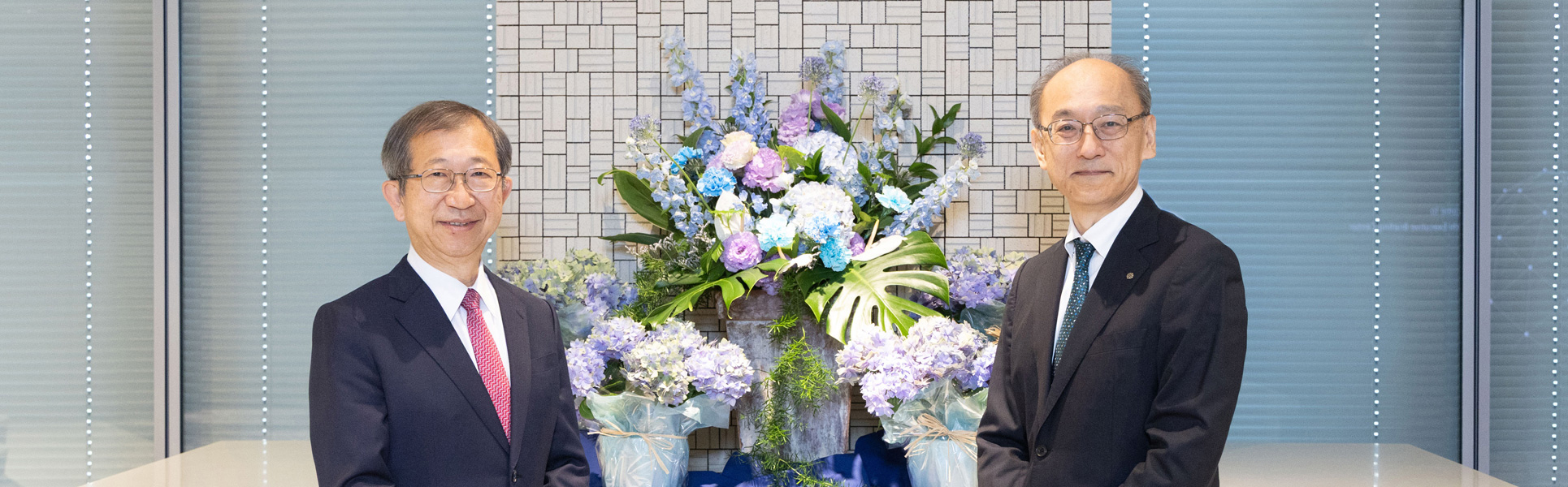
No.61 Interview with Mr. Tatsuya Terazawa
The world today faces an unprecedented convergence of challenges: rising geopolitical risks, mounting pressure to decarbonize, and surging electricity demand driven by the construction of new data centers as AI use expands. Against this backdrop, how will Japan ensure its energy security and strengthen its industrial competitiveness? For this interview, we were honored to welcome Mr. Tatsuya Terazawa, Chairman and CEO of The Institute of Energy Economics, Japan (IEEJ). We discussed the essence of energy policy, and the role Japanese companies are expected to play, drawing on his experiences with such events as the oil crises and the accident at the Fukushima Daiichi Nuclear Power Station. We also explored perspectives on turning crisis into opportunity and the potential of green transformation (GX) and digital transformation (DX) to help make that a reality.
(Interviewer: Norihiro Suzuki, Chairman of Hitachi Research Institute)
Table of Contents
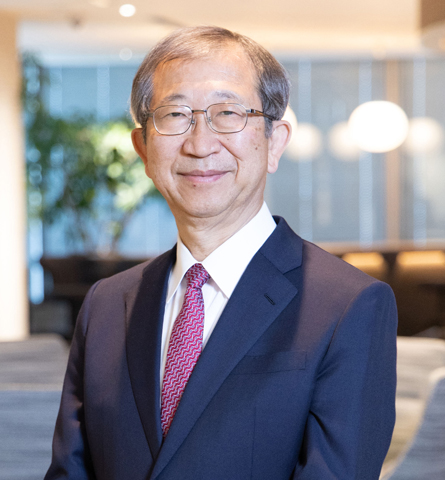
Mr. Tatsuya Terazawa
Chairman and CEO of The Institute of Energy Economics, Japan (IEEJ)
Born in 1961. After graduating from the Faculty of Law, the University of Tokyo, in 1984, he joined the Ministry of International Trade and Industry (MITI; now the Ministry of Economy, Trade and Industry, METI). He went on to hold a succession of posts, including Executive Secretary to the Prime Minister (2011); Director-General, Trade and Economic Cooperation Bureau; and Director-General, Commerce and Information Policy Bureau. From 2018 to 2019, he served as Vice-Minister for International Affairs, leading Japan’s trade and industrial policy. After retiring from government service, he held positions including Senior Advisor of the Cabinet Office, before becoming Chairman and CEO of The Institute of Energy Economics, Japan (IEEJ) in July 2021, a post he continues to hold. He is also a Senior Specially Appointed Professor at Tokyo University of Science. He currently serves on the Strategic Policy Committee of the Advisory Committee for Natural Resources and Energy and has been closely involved in the formulation of Japan’s Seventh Strategic Energy Plan. He earned an MBA from Harvard Business School in 1990.
SuzukiMr. Terazawa, you spent many years leading trade and industrial policy at the Ministry of Economy, Trade and Industry (METI). Today, as head of The Institute of Energy Economics, Japan (IEEJ), you stand at the forefront of global energy affairs.
TerazawaThe IEEJ, where I serve as Chairman and CEO, was founded in 1966 and marks its 60th anniversary in 2026. The institute has been sustained by the support of many people and organizations, including Hitachi, Ltd. and others in Japanese industry, as well as the relevant government ministries and agencies. I would like to begin by expressing my sincere gratitude to all of them.
Looking back, one could say that the history of the IEEJ is itself the story of Japan’s energy journey. The institute initially focused mainly on oil-related research. But after the first oil crisis in 1973, as Japan vigorously accelerated efforts to diversify its energy mix, its research scope expanded to include liquefied natural gas (LNG), coal, and nuclear power, as well as energy efficiency. Today, our research has broadened further to include new energy sources such as renewables.
A major turning point came in 1997 with the adoption of the Kyoto Protocol at the third session of the Conference of the Parties to the United Nations Framework Convention on Climate Change (COP3). This prompted us to strengthen our work on global environmental issues. Since then, we have engaged in a wide range of activities, including international negotiations on cross-border carbon credit trading, support for designing emissions trading markets, and life-cycle carbon footprint analysis. Global environmental research has become the IEEJ’s second pillar, alongside energy research.
The IEEJ’s third pillar is research in the field of geopolitics. To expand the scope of our research in this area, we merged with the Japanese Institute of Middle Eastern Economies (JIME) in 2005. This was because energy and the Middle East are closely intertwined. Today, beyond the Middle East, we study countries and regions with close ties to Japan, including the United States, Europe, Russia, China, India, and ASEAN.
In this way, the IEEJ is one of the few think tanks in the world to conduct integrated research across energy, global environmental issues, and geopolitics. These three pillars are all interconnected and represent the very challenges facing Japan and the world; for that reason, we continue our work to help solve them.
SuzukiSo, your research covers the front lines of global challenges, not just those facing Japan. I can see what an extremely important role the IEEJ plays.
SuzukiDuring your years at MITI and METI, you led Japan’s trade and industrial policy with great distinction. Could you tell us how those experiences have shaped the perspective you hold today?
TerazawaIn 1990, I took up my first post as Deputy Director in what was then the Power Development Division of the Agency for Natural Resources and Energy (ANRE). This division was responsible for all aspects of the power sector: short- and long-term supply and demand, fuel procurement, and facility planning. It also supported the selection of power plant sites, so its duties were extremely broad. I had just returned to Japan after completing my studies at Harvard Business School, and a difficult challenge awaited me right away.
As it happened, 1990 was the year when the summer electricity supply-demand balance became so tight, particularly in the Tokyo Electric Power Company (TEPCO) service area, that there was a risk of blackouts. At the time, energy demand was growing rapidly, fueled by the bubble economy. On the supply side, however, capital investment in facilities was insufficient, partly due to the economic slump following the second oil crisis. Against that backdrop, we faced an extremely serious issue: how to respond to the tight supply-demand situation. In the midst of all this, the Gulf War broke out. On top of the tight supply-demand situation, we also had to deal with energy security issues.
So, first, to increase supply capacity, we began studying the expansion of nuclear power plants. At the time, nuclear power faced strong headwinds as a result of the Chernobyl nuclear power plant accident in 1986. Under those circumstances, I worked hard to advance nuclear power policy while seeking the understanding of local communities.
Next, we looked at strengthening the transmission grid. At that time, electricity supply and demand outside the Tokyo area were relatively less tight. We therefore worked to strengthen the grid so that electricity could be transferred from other areas to those facing tight supply.
In addition, interest in global environmental issues was growing across society, partly because it had been announced that the United Nations Conference on Environment and Development (UNCED/the Earth Summit) would be held in Rio de Janeiro, Brazil, in June 1992. In response, we established a surplus electricity purchase scheme, under which electric power companies bought surplus solar power at retail prices. We thus promoted the purchase of renewable electricity as a voluntary initiative a full 20 years before the feed-in tariff (FIT) system was introduced in 2012. Today, feeding electricity from renewable sources into utility grids—known as “reverse power flow”—is common practice, but back then it was not permitted because it was thought to undermine grid stability. I worked tirelessly to make it possible.
Although I served as Deputy Director for only two years, looking back now, the difficult problems I faced during that period overlap precisely with the challenges Japan faces today. How should we advance the use of nuclear power? How should we increase renewable energy? How should we stabilize electricity supply and demand? How should we develop the transmission grid? And on top of that: How should we address global environmental issues? How should we deal with geopolitical issues? I believe it is precisely my experience during those two years that underpins my current responsibilities.
Later, in September 2011, I became Executive Secretary to Prime Minister Yoshihiko Noda. It was just six months after the accident at the Fukushima Daiichi Nuclear Power Station, and I devoted myself to bringing the situation under control and stabilizing it, as well as to the reconstruction of the entire Tohoku region. I was also involved in efforts to restart two reactors at the Ohi Power Station (Ohi-cho, Ohi-gun, Fukui Prefecture). It was the first restart of a nuclear plant since the Fukushima accident roughly a year earlier, and partly for that reason it was a difficult phase, with public opinion sharply divided. Under those circumstances, the Cabinet at the time approached the matter with determination, believing that restarting nuclear power plants was essential to Japan’s economy and people’s lives. Watching this up close, I was reminded anew of how important a stable balance of energy supply and demand is, and I came to realize how difficult it is to gain public understanding, particularly regarding the use of nuclear power.
SuzukiYou have repeatedly faced particularly difficult periods in addressing Japan’s energy challenges, and it is precisely because you overcame them that you are where you are today.
TerazawaIf I were to mention one more major assignment from the period that followed, it would be my appointment in 2015 as Director-General of the Trade and Economic Cooperation Bureau. The issue at the time was the Obama administration’s restrictions on coal-fired power. Committed to tackling global environmental issues, the Obama administration had formulated its Climate Action Plan in 2013. It was strongly pushing a move away from coal-fired power—for example, by halting, in principle, U.S. government financing for new coal-fired power plants overseas. Partly as a result, every time coal-fired power came up in meetings between President Barack Obama and Prime Minister Shinzo Abe, the two sides’ views remained at odds. This was because the Abe Cabinet believed that coal-fired power was not necessarily bad from the standpoint of global environmental issues. On the contrary, it believed that using Japanese technology to promote high-efficiency coal-fired generation in emerging economies and elsewhere would actually help address those issues by reducing CO2 emissions.
Even under these circumstances, with COP21 set to open in late November 2015, we needed to conclude negotiations with members of the Organisation for Economic Co-operation and Development (OECD), including the United States and the European countries. In the end, support for inefficient coal-fired power was discontinued, while support for high-efficiency coal-fired power was permitted. Partly because the cost of renewable energy was still high at the time, high-efficiency coal-fired power was accepted as a realistic option, and it was agreed that the arrangement would be reviewed after four years.
As this episode illustrates, finding realistic solutions to global environmental and energy issues requires balancing these objectives with cost considerations. I feel that this experience, too, underpins my current responsibilities.

SuzukiHow do you view the rapid changes in the international situation in recent times?
Terazawa I feel that the escalating tensions in the Middle East, which began with the U.S. and Israeli attacks on Iran in February 2026, have caused the greatest disruption the energy sector has ever seen. It is fair to call it one of the largest energy crises ever. I experienced the first oil crisis in 1973 when I was 12 years old, and the sense of crisis at that time is etched in my memory. I think the current crisis is even larger in scale.
As of today (June 5, 2026), I think Japan has been handling the crisis relatively well, while other Asian countries are struggling with their energy supplies. This is the result of the tremendous efforts of the government, energy-related companies, and industry as a whole. At the same time, it can also be attributed to the energy security policies Japan has pursued over the years. Since the first oil crisis, Japan has broadened its energy mix and worked to diversify its supply sources and conserve energy, and those efforts are now bearing fruit. Japan has been able to maintain a certain degree of resilience even in one of the largest energy crises in history. Seeing that, I feel a sense of crisis and yet, at the same time, I also see opportunities in this situation.
During the first oil crisis, what worried me, even as a child, was that Japanese industry, which at the time depended on cheap Middle Eastern crude oil, might be finished. I remember that vividly. Looking back, however, Japanese industry used the oil crisis as an impetus to pursue energy conservation wholeheartedly and leveraged its energy-saving technologies to make major strides on the global stage. Likewise, I hope that we can turn the current crisis into an opportunity and that it will once again serve as a springboard for Japanese industry to make great strides worldwide.
SuzukiAs you say, we should see crisis as an opportunity.
In fact, Hitachi Research Institute (HRI) was founded against the backdrop of The Limits to Growth, put forward by the Club of Rome in 1972. In response to this warning, Kenichiro Komai, then chairman of Hitachi, Ltd. and a member of the Club of Rome, founded HRI in 1973. His aim was to establish a “soft science” integrating economy, society, management, and technology, and to forecast the future and solve social issues from a medium- to long-term perspective. Against this background, energy issues have been a major pillar of HRI’s work.
In addition, when I was General Manager of the Research & Development Group at Hitachi, Ltd., I was involved in establishing the Hitachi-UTokyo Laboratory (H-UTokyo Lab.) in 2016. It was launched with the theme “Toward Realizing Electricity Systems to Support Society 5.0,” following discussions between Makoto Gonokami, then President of the University of Tokyo, and Hiroaki Nakanishi, then Executive Chairman of Hitachi, Ltd. I truly believe that energy is the most important issue for Japan’s future, and also a path to growth. Today, H-UTokyo Lab. is studying how to reconcile the public-interest and market-competition dimensions of energy systems, as well as ways to accelerate the energy transition at the regional level. Energy is the foundation of national strength, and we at the Hitachi Group, too, intend to contribute to turning the energy crisis into an opportunity.
SuzukiI would like to ask you about the macro picture and energy security. Today, the energy landscape is more complex than ever. It now combines geopolitical risks, such as the situations in Ukraine and the Middle East, with a surge in electricity demand driven by expanding AI use and the construction of new data centers. What do you see as the essence of these major changes in society?
TerazawaAfter the first and second oil crises, there was a period in Japan when people were keenly aware of energy security. But human memory inevitably fades over time. From around the late 1990s to the early 2000s, energy became a commodity. In other words, it came to be seen as something that is simply there, like air or water. As I recall, energy demand was not growing much at the time, there were no energy security issues, and the prevailing attitude was that all that mattered was a low price.
That perception was overturned by the accident at the Fukushima Daiichi Nuclear Power Station and the experience of rolling blackouts. The restart of the Ohi Power Station that I mentioned earlier was also unavoidable, given the electricity supply-demand situation. Maintaining a stable balance of electricity supply and demand cannot be taken for granted, and not just any electricity will do. It was in 2011 that public sentiment began to shift in this way.
Then, in October 2020, Prime Minister Yoshihide Suga declared that Japan would achieve carbon neutrality by 2050. This brought calls to curb CO2 emissions, not just to ensure a stable energy supply, and the quality of energy began to come under intense scrutiny.
Furthermore, Russia’s aggression against Ukraine, which began in February 2022, followed by the U.S. and Israeli attacks on Iran in February 2026, drove home the fact that sufficient quantities of energy must also be secured.
Meanwhile, electricity demand, which had been declining since 2007, has now reversed course and started to rise again. This is because electrification is advancing, mainly in industry. The drivers are the construction of new data centers as AI use expands, the reshoring of semiconductor production and other industrial activities, and the shift in steelmaking from blast furnaces to electric arc furnaces. In short, we must secure enough supply to meet electricity demand while working under constraints such as the need to reduce CO2 emissions. Energy, which had become commoditized and was taken for granted, now faces major challenges that are extremely complex and fraught with inherent contradictions. Energy is what sustains Japan’s industry and the lives of its people, and the energy situation is directly linked to international competitiveness. That is the highly complex situation we find ourselves in today.
SuzukiIn this difficult situation, fuel is one important element of a stable energy supply. But another challenge is building a comprehensive supply chain that can reliably procure and supply infrastructure equipment, such as power generation facilities and transmission and distribution networks, as well as the critical minerals, such as rare metals, needed to manufacture that equipment. As priorities shift from an overemphasis on “cost” to a focus on “resilience,” what bottlenecks do you think Japan faces, and what strategies should it pursue?
TerazawaThe term that sums up the current situation best is “energy trilemma.”*1 It is extremely difficult to achieve the 3Es—Environmental Sustainability, Economic Efficiency, and Energy Security—at the same time.
From an energy security perspective, I believe it is extremely important to build diverse supply channels. That calls for a broad view: we must secure not only fuel but also infrastructure facilities and equipment, along with the critical minerals essential for manufacturing that equipment.
As electricity demand rises again, the products and facilities needed to advance carbon neutrality become indispensable and securing them could become a bottleneck for Japan. Ensuring a reliable supply of the necessary facilities and equipment is an essential condition for the energy transition and for growth.
At such a juncture, Hitachi will have an important role to play. Developing energy-related technologies and building resilient critical-mineral supply chains in which Japan itself takes part are extremely important national policy priorities. I have high expectations for the contributions of Hitachi, with its wide range of technologies.
SuzukiThank you. The EU is ahead on carbon neutrality and on biodiversity, and partly for that reason Hitachi is stepping up its own efforts, including joint research with Imperial College London (ICL). We will also continue to work vigorously to build resilient supply chains.
SuzukiI would like to ask about technological innovation and the energy transition. To support the expansion of renewable energy and the surge in demand, Hitachi is building a next-generation grid (transmission and distribution network) using HVDC (High Voltage Direct Current) and digital technologies. What are your expectations for these efforts?
TerazawaGenerating renewable energy requires large areas of land to harness abundant solar and wind power, and there are now high hopes for Hokkaido’s potential. However, since the main center of electricity demand is the Tokyo metropolitan area, transmission lines linking it with Hokkaido are essential. In this context, HVDC, which has very low power losses in long-distance, high-capacity transmission, is undoubtedly an extremely important technology.
The challenge of distance between where renewable energy is generated and where it is consumed is not unique to Japan. ASEAN likewise needs a wide-area transmission network to efficiently share renewable energy, and HVDC is expected to be a key technology for the ASEAN Power Grid (APG) initiative as well. For example, HVDC would provide effective infrastructure for transmitting electricity generated from renewable energy in countries of the Mekong River Basin, such as Cambodia and Laos, to demand centers such as Singapore.
However, investment in such grids must be carried out according to a clear plan. Taking supply-chain bottlenecks into account as well, we need not only to physically strengthen transmission and distribution networks but also to make them smarter and use them more efficiently. Moreover, beyond the grid itself, we also need smarter systems on the demand side, where consumers store electricity in batteries for their own use, and distributed energy resources must be managed in real time. In this way, Hitachi, which is well versed in both the hardware side, such as transmission and distribution networks, and the software side of operations, will likely play an increasingly important role in strengthening both.
SuzukiYour words give me a renewed sense of responsibility. We must not stop at building physical infrastructure; we must also take on the major challenge of redesigning energy systems, including linking data with electricity trading markets to optimize supply and demand.
SuzukiWhat innovation areas do you think Hitachi should focus on in particular?
TerazawaWhen we have to secure a stable supply of energy that meets both quantity and quality requirements, solutions are hard to find within the conventional energy sector alone. There are limits to what can be achieved in energy reform through traditional green transformation (GX) alone. This is exactly where digital transformation (DX) comes in. Hitachi is actively pursuing DX as well, and leveraging DX will likely be key to GX too.
Take energy conservation, for example. Japan has been working on energy conservation since the oil crises, but traditional energy-saving methods are now like wringing a dry towel—we have reached the point where we cannot squeeze out any more savings. I believe that applying AI will open up a whole new dimension of energy conservation.
Some argue that using AI will actually increase electricity demand and therefore represents nothing more than a burden, but I disagree. The potential to use AI to make economic and social activities more efficient and to further promote energy conservation remains largely untapped, and I believe this is an area with considerable potential for growth. To achieve this, however, it is essential to have the know-how to apply digital capabilities to the real world. In Hitachi’s terms, that means having both IT and OT (operational technology). Hitachi is engaged in Energy, Mobility, and Connective Industries—all the fields that form the very core of Japan’s industrial base. These efforts will make a major contribution to streamlining real-world operations through AI.
These days, when I read the newspapers, I mostly see articles saying that rapid advances in AI technology make data centers indispensable and will require even more electricity. But there is still plenty of room to make AI itself more energy-efficient and to improve the efficiency of data centers. Currently, attention is focused on cooling data centers, but that is not the only issue. We should also look at improving the efficiency of electrical equipment, semiconductors, and even algorithms. There are also high expectations for Photonics-Electronics Convergence*2, which is said to contribute greatly to reducing power consumption. In other words, I believe the potential of AI will expand greatly across all phases and domains—such as streamlining operations through AI, making AI itself more energy-efficient, and improving the efficiency of entire energy systems through AI.
These initiatives can also be applied to EMDEs*3, such as those in Southeast and South Asia, where energy demand is set to grow. The goal is to pursue carbon neutrality for the planet as a whole: expanding investment in energy while keeping that investment as efficient as possible, and at the same time raising living standards. To achieve this, GX in EMDEs is truly the key. I look forward to seeing Hitachi’s contributions toward the three goals in these countries: protecting the global environment, achieving growth, and enhancing well-being.
SuzukiAs you say, connecting and optimizing the digital and real worlds through IT × OT × products is one of Hitachi’s strengths. Systematically streamlining power systems and data centers is also extremely important. Recently, attention has also turned to “watt-bit collaboration,” which aims to develop and operate two kinds of infrastructure in an integrated way so that both are optimized: power infrastructure, such as power plants that supply electricity (watts), and communications infrastructure, such as data centers that handle information (bits). Here, too, we at Hitachi believe we can contribute by drawing on our extensive capabilities.
SuzukiMy final question concerns strengthening the competitiveness of Japanese companies. How should Japan, a country with scarce natural resources, turn its current energy constraints into growth and stronger industrial competitiveness? Please share your outlook for the future.
TerazawaAs I mentioned earlier, I truly hope Japan will turn the current crisis into an opportunity. In that regard, the area to focus on above all is AI. The U.S. and China lead in AI research and development and in rolling out services, but Japan’s strength lies not only in the digital realm but also in the real world. In other words, Japan should be well placed to apply AI to solving real-world problems. I very much hope Japanese companies will develop AI linked directly to solving real-world problems. If AI development can go hand in hand with solving real-world problems, that will be a major strength for Japan.
If such AI can be used effectively, it should be able to contribute to economic growth and higher living standards while curbing energy demand. There is no doubt that energy conservation will be a major pillar, not just in Japan but especially in the countries of Southeast and South Asia, which are expected to grow in the years ahead. In these countries, I hope Japanese companies, backed by Japan’s strong brand image as a leader in energy conservation, will make full use of their capabilities.
As renewable energy continues to grow, it will also be essential to stabilize power systems in real time in response to output fluctuations. The massive blackout on the Iberian Peninsula in April 2025 is a case in point. The cause is said to have been that the mechanisms for optimally controlling grid voltage did not function adequately. With large numbers of solar, wind, and other generation facilities with highly variable output in operation, the grid-voltage control mechanism could not respond in time to rapid voltage changes. I think such complex operations, including forecasting, represent an area where AI can show its strengths.
Meanwhile, nuclear power is once again attracting attention as a baseload power source in the energy mix. I have high hopes for the innovative light water reactor Hitachi is working on, which I understand is designed for enhanced safety, with countermeasures against a range of natural disasters and accidents also in mind. There is also growing demand for small reactors, both for data centers and for emerging economies. Hitachi is jointly developing a next-generation small modular reactor (SMR) with GE Vernova of the U.S. This, too, is expected to play an important role in achieving carbon neutrality.
Finally, let me turn to my expectations for nuclear fusion. As a child, I thought that nuclear fusion would eventually solve our energy issues, but there is still a long way to go. However, the prospect of making fusion a reality is finally coming into view. I understand that Hitachi is developing major equipment such as plasma heating systems and exhaust systems. I hope Hitachi will lead Japan’s fusion industry in this field as well.
SuzukiI would also appreciate any advice you may have for HRI.
TerazawaI think HRI’s role is to be positioned to capture global trends and transformations from a broader, global perspective. Hitachi has achieved remarkable results, with global revenues of 10 trillion yen. On the other hand, I feel that Hitachi has yet to fully leverage its potential globally. Business divisions inevitably tend to take a micro perspective. So, I hope HRI will connect that micro perspective to the macro picture, uncover hidden potential, and communicate it powerfully so that it can be realized globally.
SuzukiAs you point out, HRI’s role is to build a solid bridge between the macro and the micro. We will continue to strengthen our efforts. Thank you very much for taking the time to speak with us today.
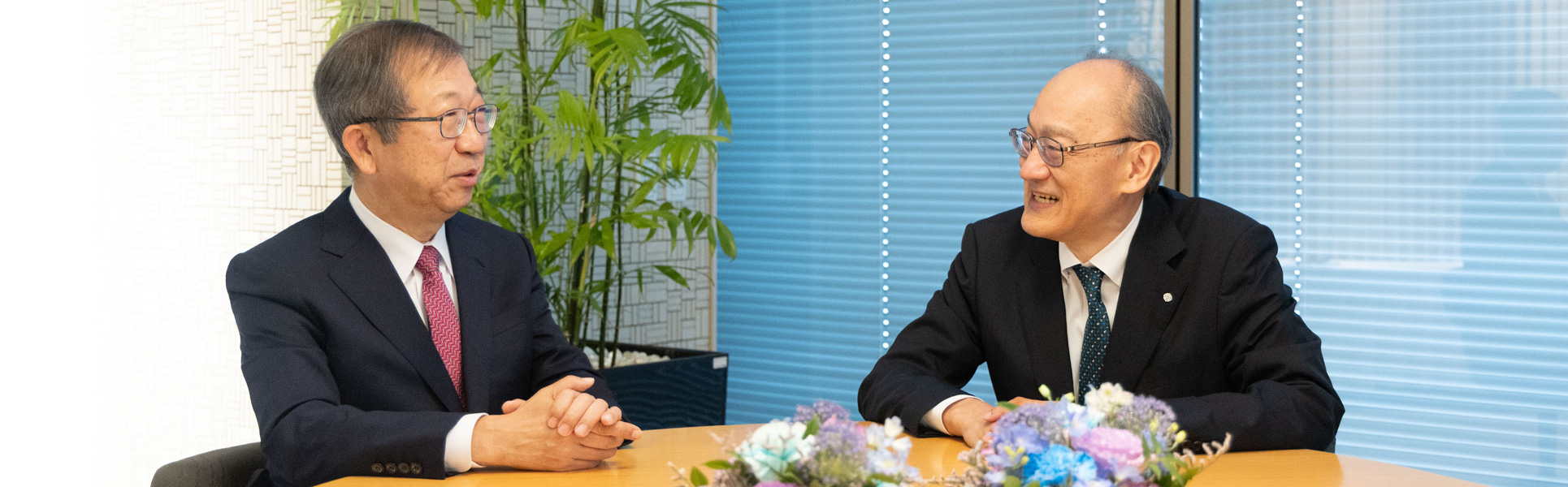
The tight electricity supply-demand situation of 1990, the accident at the Fukushima Daiichi Nuclear Power Station, the global shift toward decarbonization, and the current geopolitical crisis—Mr. Terazawa has taken part in decision-making on the ground in each of these. His words, drawn from that experience, carried a weight that no theoretical discussion could match. What also left a strong impression was the forward-looking view that, rather than being pessimistic about the crisis, Japan should leverage the energy-saving technologies it has cultivated and the power of DX to create new growth. This conversation reminded me once again of the importance of creating new values by solving social issues while keeping a close eye on macro-level changes in the world.
Norihiro Suzuki, Chairman, Hitachi Research Institute
We provide you with the latest information on HRI‘s periodicals, such as our journal and economic forecasts, as well as reports, interviews, columns, and other information based on our research activities.
Hitachi Research Institute welcomes questions, consultations, and inquiries related to articles published in the "Hitachi Souken" Journal through our contact form.